Wolfatek completes the unification of business software.
September 7, 2026
If you place a terracotta pot on your desk, press an acorn two inches into the damp dark of the soil, and sit there watching it with a magnifying glass, you will conclude, within three hours, that nothing is happening.
If you bring modern corporate management to bear upon that pot, your diagnosis will be swift and merciless. There is zero visible velocity. There are no demonstrable deliverables on the dashboard. The acorn has failed every thirty-day milestone, missed its sprint commitments, and generated no measurable return on investment.
A panicked manager, desperate for reassurance, will do the only thing their training knows how to do: they will take a trowel, dig up the earth, and inspect the acorn to see if anything is happening.
And in that single, frantic act of impatience, they kill the very life they were trying to measure.
Yet, if you set a camera on a tripod, program the shutter to fire once every six hours, and play the sequence back across eighteen months, the screen reveals a truth so violent and miraculous it takes your breath away.
The stillness was a lie.
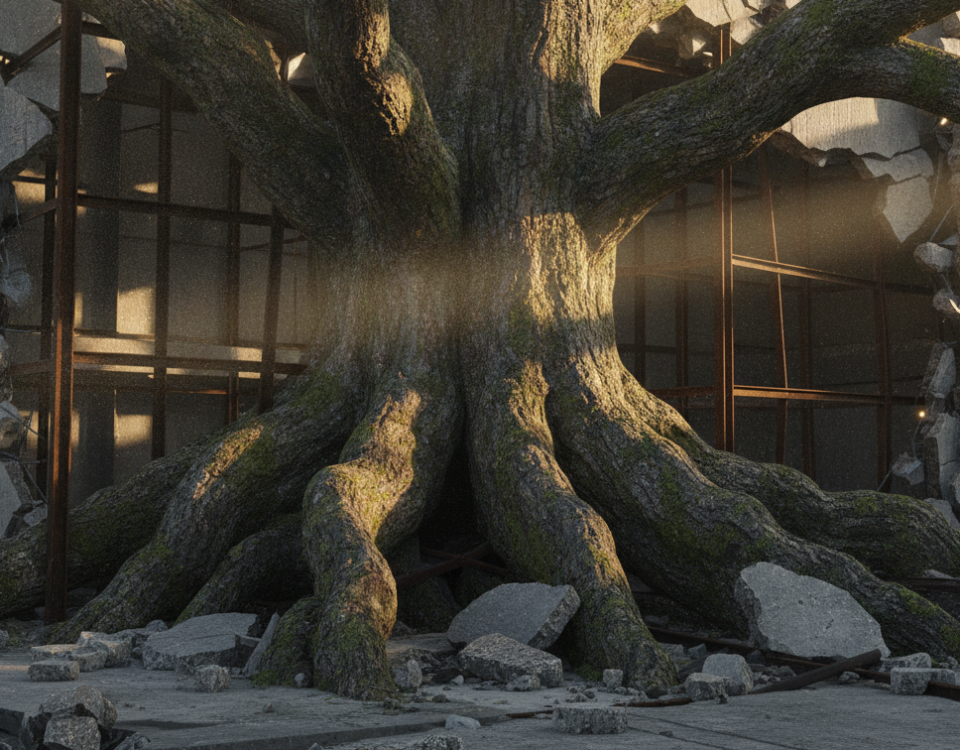
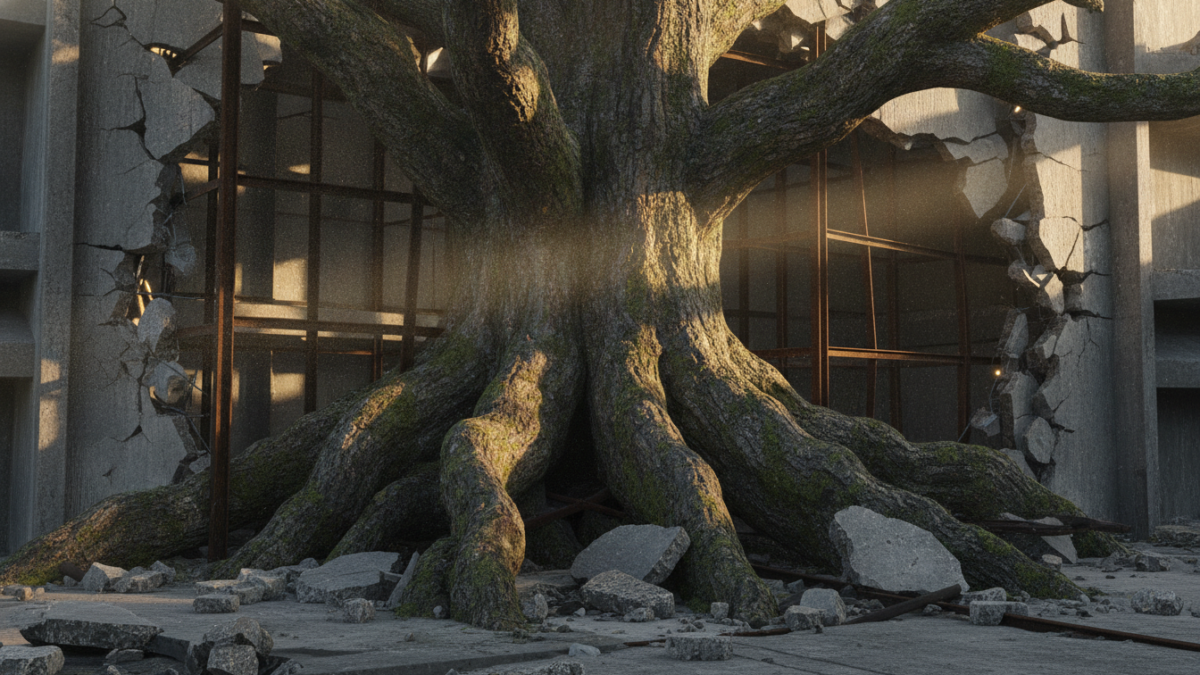
Beneath the soil, where no human eye could see, a fierce and deliberate drama was unfolding. A taproot, white and tender, was driving downward with stubborn precision—navigating around coarse grains of quartz, seeking out microscopic pockets of moisture, anchoring itself into the bedrock. It was preparing a foundation capable of bearing five tons of timber against the winter gales of the next century.
What looked like dead quiet was actually the most critical work the tree would ever do.
The Impatience of the Machine
We live inside an economic machine that worships the immediate. It demands everything now: the instant response, the overnight turnaround, the quarterly spike, the automated shortcut. It treats time as an enemy to be conquered, an overhead to be compressed out of existence.
And because it refuses to wait, it has systematically devalued the one thing that gives work lasting dignity: fine attention to detail.
Detail is slow. Detail is quiet. Detail is the master joiner spending an extra forty minutes smoothing the blind underside of a timber rail where nobody will ever run their hand—simply because he knows it is there, and because an honest craft refuses to hide behind veneers.
Detail is the engineer tracing a subtle voltage drop across an intricate circuit board, ignoring the clock because he knows that a loose tolerance today is a catastrophic failure two years down the line.
When a culture becomes infected with the disease of now, it loses the capacity to see detail. It begins to manage with a sledgehammer. People are collapsed into blunt, crude categories: high performers, low performers, headcount, resources, units of production.
And when leaders begin to view human beings through that lens, they stop developing people. They start consuming them.
The Underground Season
You cannot microwave a master craftsman. You cannot rush a human soul into its full potential on a thirty-day performance improvement plan.
Every person on your team who will ever amount to anything of genuine substance must go through their underground season.
The underground season is the period—often lasting years—where a person’s progress is largely invisible to an executive dashboard. It is the season where they are quietly wrestling with their own self-doubt. It is the season where they are making mistakes in private, learning the true weight of responsibility, discovering what it feels like to break something valuable and have to stay late to fix it with their own hands.
In that quiet dark, they are not generating flashy metrics. They are doing something far more vital: they are growing a conscience. They are building instincts. They are forging character.
A shallow manager hates the underground season because they cannot paste it into a slide deck to justify their own authority. They hover over the shoulder. They demand hourly status pings. They micromanage the soil. They dig up the roots every Tuesday morning to verify growth, and then act surprised when the young sapling wilts, loses heart, and resigns.
A grounded leader understands the biology of the work. They stand over that quiet pot, shield it from the harshest drafts, keep it watered with steady encouragement, and have the courage to say:
“Take your time down there. Get your roots around the stone. Don’t worry about showing off fruit yet. Build the foundation that can support it later.”
The Eye of the Artisan
To lead someone to their full potential requires that you abandon the hurried, squinting gaze of the bureaucrat and cultivate the fine, quiet attention of an artisan.
When you are rushing, you see only the output. When you slow down, you begin to see the human being:
- You notice that a quiet technician went silent during a morning briefing—not out of indifference, but because they spotted a subtle architectural flaw that everyone else was too hurried to acknowledge, and they are still gathering the courage to voice it.
- You notice the small, uncredited bit of pride a junior developer took in rewriting an ugly legacy function on their own time, simply because they couldn’t bear to leave it broken.
- You learn to distinguish between the fatigue of a person who is lazy, and the deep, sacred exhaustion of a faithful worker who has poured everything they have into holding a messy project together.
That level of discernment cannot happen at a sprint. It requires that you pay attention. It requires that you value the micro-movements of human growth over the macro-demands of an arbitrary calendar.
The Time-Lapse View
Leadership is not an act of surveillance. It is an act of faith.
It is holding the time-lapse camera in your mind. It is looking at a young, hesitant, rough-edged apprentice today, and seeing—with absolute, unshakeable conviction—the seasoned, resilient master they will become five, seven, or ten years down the line.
It means refusing to write someone off because of a bad month, a clumsy error, or a season where they seem completely still. It means recognizing that human growth does not happen in a mechanical, upward-ticking trendline; it happens in subterranean leaps, quiet plateaus, and seasonal dormancy.
If you are leading people today, put away the trowel. Stop digging up what God and time are trying to knit together in the dark.
Give your people the dignity of your patience. Give their craft the honour of your attention.
The growth is happening. You just have to be still enough to see it.
About the Series
Purpose Over Profit — How to Lead Fully Grounded
Purpose Over Profit is an open leadership resource created for business leaders, people managers, founders, and leaders of every kind. It exists to help you lead your people better—championing healthy, positive, people-centric ways of working that reject toxic corporate rigidity, mechanical bureaucracy, and short-term extraction in favour of genuine stewardship, deep trust, and lasting human flourishing.