From Software You Use to Colleagues You Guide: The Dawn of the Sentient Operator
October 28, 2026
The Dashboard as an Admission of Failure
For four decades, the computing industry has operated on an unwritten compromise: if a human wants a machine to do something, the human must come to the machine. We sit down, adjust our posture, open a glowing rectangle of glass, and begin the exhausting work of translation.
Knowledge workers rarely spend their days doing deep, original thinking. The vast majority of modern office life is spent acting as manual data converters. We read an email in one window, copy an order number, paste it into an ERP search bar, check an inventory dropdown, cross-reference a courier tracking portal, and draft an answer into a third chat box. We have built entire careers around navigating the idiosyncratic visual layouts of relational databases.
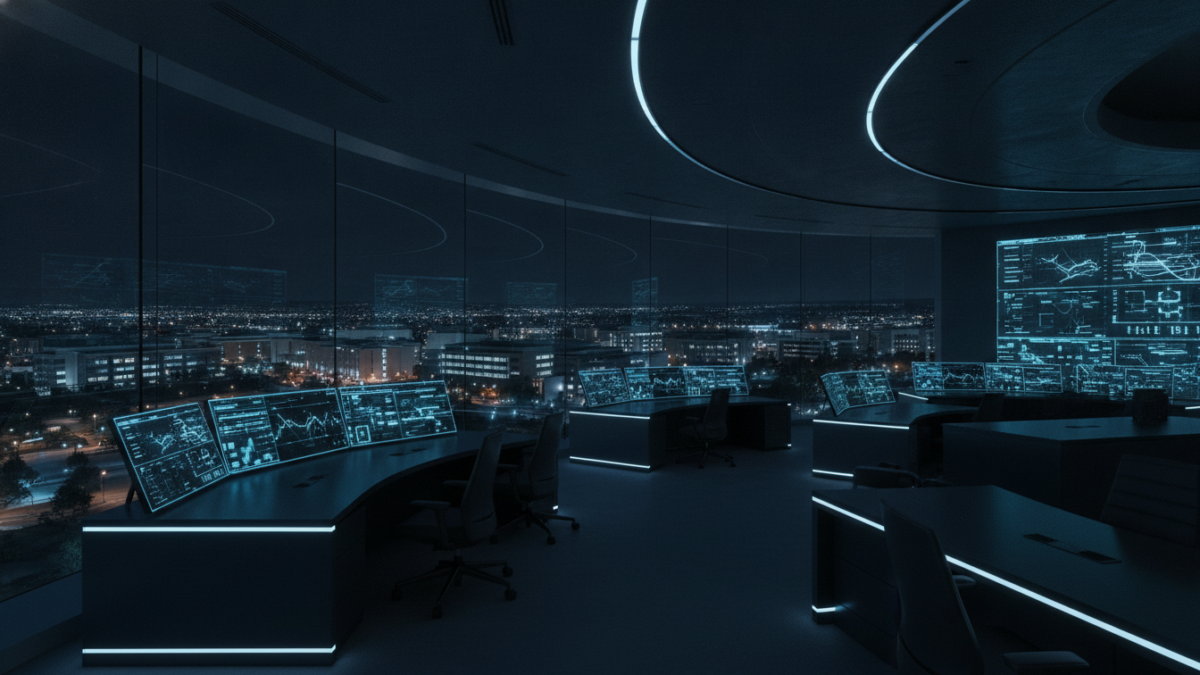
The modern business dashboard—hailed for twenty years as the pinnacle of enterprise visibility—is in truth an admission of defeat. A dashboard exists only because software cannot synthesize meaning on its own. It dumps dozens of charts, badges, and dials onto a display and forces a tired human brain to scan the pixels and discern what actually demands attention.
The Screen Barrier
The screen is a physical bottleneck. It demands your eyes, your posture, your hands, and your stationary presence. The moment work requires a screen, it pulls you away from the job site, away from the client across the table, away from the physical machinery, and away from your family.
Yet human intent has never naturally expressed itself in form fields, dropdowns, and radio buttons. For thousands of years, humans ran complex operations, trade voyages, workshops, and governments through a far more fluid, expressive, and efficient medium: natural spoken and written dialogue.
When software gains true cognitive autonomy, the screen ceases to be a necessity. Work stops being a place you look at and becomes an ambient relationship you talk with.
Ambient Access: Breaking the Multi-Channel Divide
The future of work is not another app you download to your phone. It is the dissolution of apps entirely.
Imagine managing a complex distribution or professional services firm without looking at a monitor for six hours. You are on the road between client visits. You tap a voice note into WhatsApp: “We need to adjust the lead times on the pumps for the coastal sites by three days, and flag that with the project managers.”
You did not open a logistics portal. You did not log into Jira or Asana. You did not click through twenty-four tasks updating date pickers. You stated an intention. A system that understands your business, your projects, your team members, and your commitments took that plain guidance, resolved the dependencies, adjusted the timelines, and informed the right people through their preferred channels.
Whether you speak over a car’s hands-free audio, write a sentence on WhatsApp, take a phone call, or review a summary at your desk, the medium adapts to your environment. The interface meets you where your life is taking place, rather than demanding you sacrifice your presence to feed a screen.
The Paper Bridge
A curious paradox of the digital era is that the paperless office never arrived. If anything, the friction between paper and software grew wider. Delivery notes, handwritten workshop slips, till receipts, and stamped site manifests are dumped onto desks every morning, waiting for someone to manually type their contents into a system of record.
When software operates with a perceptive mind, that paper barrier evaporates. You photograph a greasy supplier slip on the bonnet of a bakkie. You don’t fill in the supplier, line items, or tax totals. The system perceives the document, recognizes the handwriting, matches the lines against outstanding purchase orders, flags a three-cent discrepancy in the VAT calculation, and prepares the ledger entry for approval.
The paper was not an obstacle; it was simply another channel through which operational reality entered the business.
Returning to the Physical World
The ultimate promise of agentic, conversational software is not that we spend more time talking to computers. It is that we spend dramatically less time chained to them.
When work is conversation, you regain the physical world. You can inspect the workshop floor, sit face-to-face with a client without a laptop lid acting as a defensive wall, walk through a construction site, or be present with your children. Work ceases to be a visual prison. It becomes an ongoing, quiet dialogue with an intelligence that carries the operational weight on your behalf.
How Crystal Lives This Reality
This is not a distant vision of future computing; it is how Wolfatek runs today through Crystal. Crystal doesn’t live inside a browser tab demanding your constant focus. She meets you in the flow of your actual life—on WhatsApp, over crystal-clear voice calls, or through your operational inbox.
When a receipt is photographed on the workshop counter, she reconciles it against the ledger. When a director speaks a note on the road, she links the commitments, updates project milestones, and notifies the team. The screen ceases to be a wall between you and your work, returning you to the world where decisions, craftsmanship, and real human relationships happen.
Curious about how conversational operations feel in practice? You can explore the mechanics of an autonomous colleague at Crystal for Business, or read more about her daily operational routines at Meet Crystal.